
About Us
Contrary to popular belief, Lorem Ipsum is not simply random text. It has roots in a piece of classical Latin literature from 45 BC, making it over 2000 years old.
Please fill out the form below and we will get back to you as soon as possible.
Contrary to popular belief, Lorem Ipsum is not simply random text. It has roots in a piece of classical Latin literature from 45 BC, making it over 2000 years old.
Medical Laboratory Technology (MLT) is a healthcare-focused course that trains students to perform diagnostic tests essential for detecting, monitoring, and treating diseases. The program covers subjects like microbiology, biochemistry, hematology, pathology, and immunology. Students learn to handle laboratory equipment, analyze blood and tissue samples, and maintain accuracy and safety standards. Practical training and internships provide real-world experience in hospitals and diagnostic labs. Graduates play a vital role in supporting doctors by delivering precise test results.
Focuses on laboratory-based diagnosis of diseases.
Covers subjects like microbiology, biochemistry, and hematology.
Emphasizes use of modern laboratory equipment and techniques.
Includes practical training and hands-on lab sessions.
Teaches safety, hygiene, and quality control standards.
Develops accuracy, observation, and analytical skills.
Provides internship opportunities in hospitals and labs.
Offers career opportunities in hospitals, diagnostic labs, and research centers.
This course builds strong technical skills, attention to detail, and ethical practices, preparing students for careers in hospitals, research labs, and diagnostic centers.
In a Medical Laboratory Technology course, you will learn how to collect, handle, and analyze biological samples such as blood, urine, and tissues. The program builds strong knowledge in microbiology, biochemistry, hematology, and pathology. You will gain hands-on experience using modern laboratory equipment and performing diagnostic tests accurately.
It also teaches safety procedures, infection control, and quality assurance practices essential in laboratories. Students develop analytical thinking, attention to detail, and proper reporting skills. The course prepares you to assist doctors in diagnosing diseases and ensures you are ready to work efficiently in hospitals, diagnostic centers, and research laboratories.
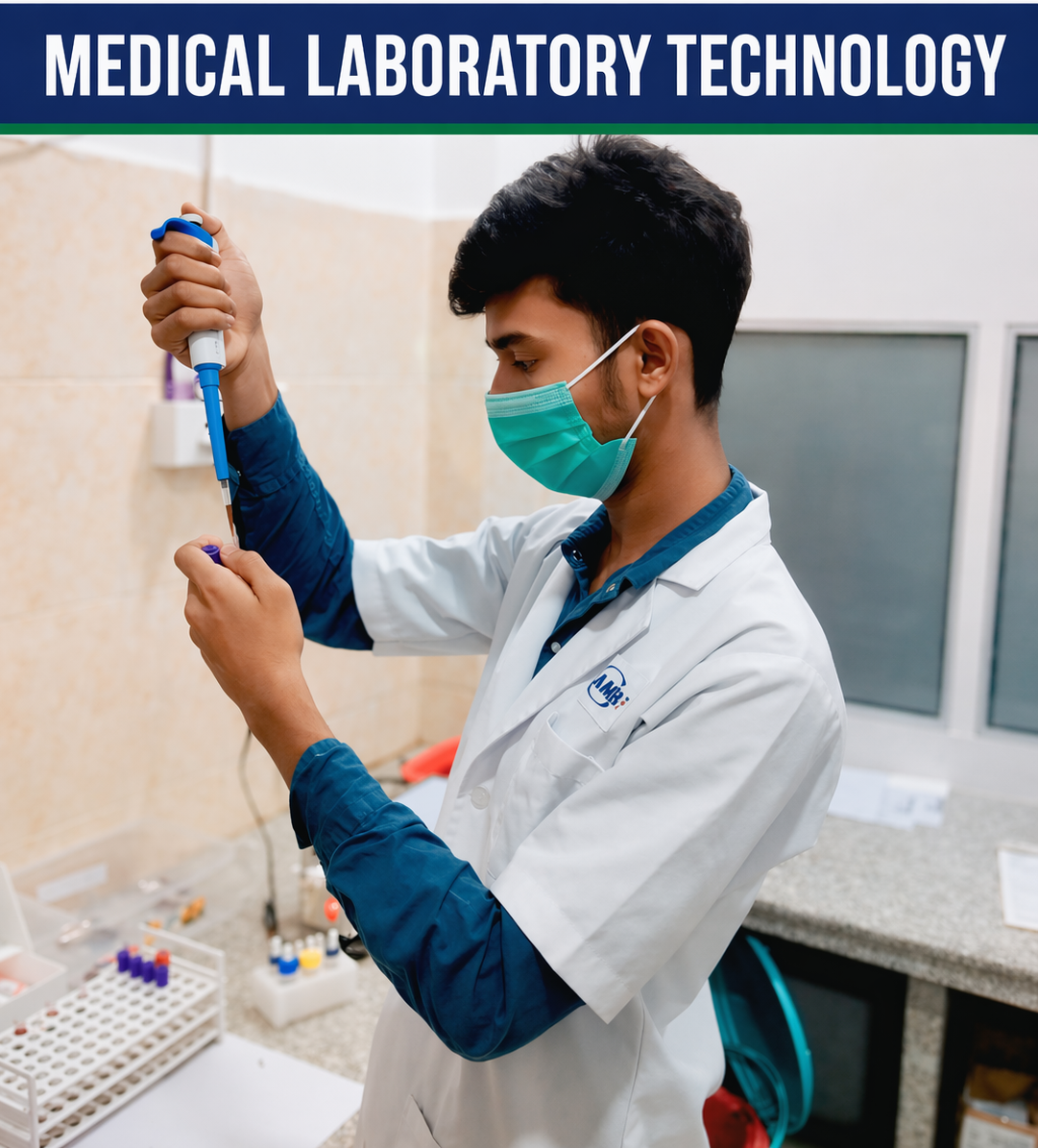
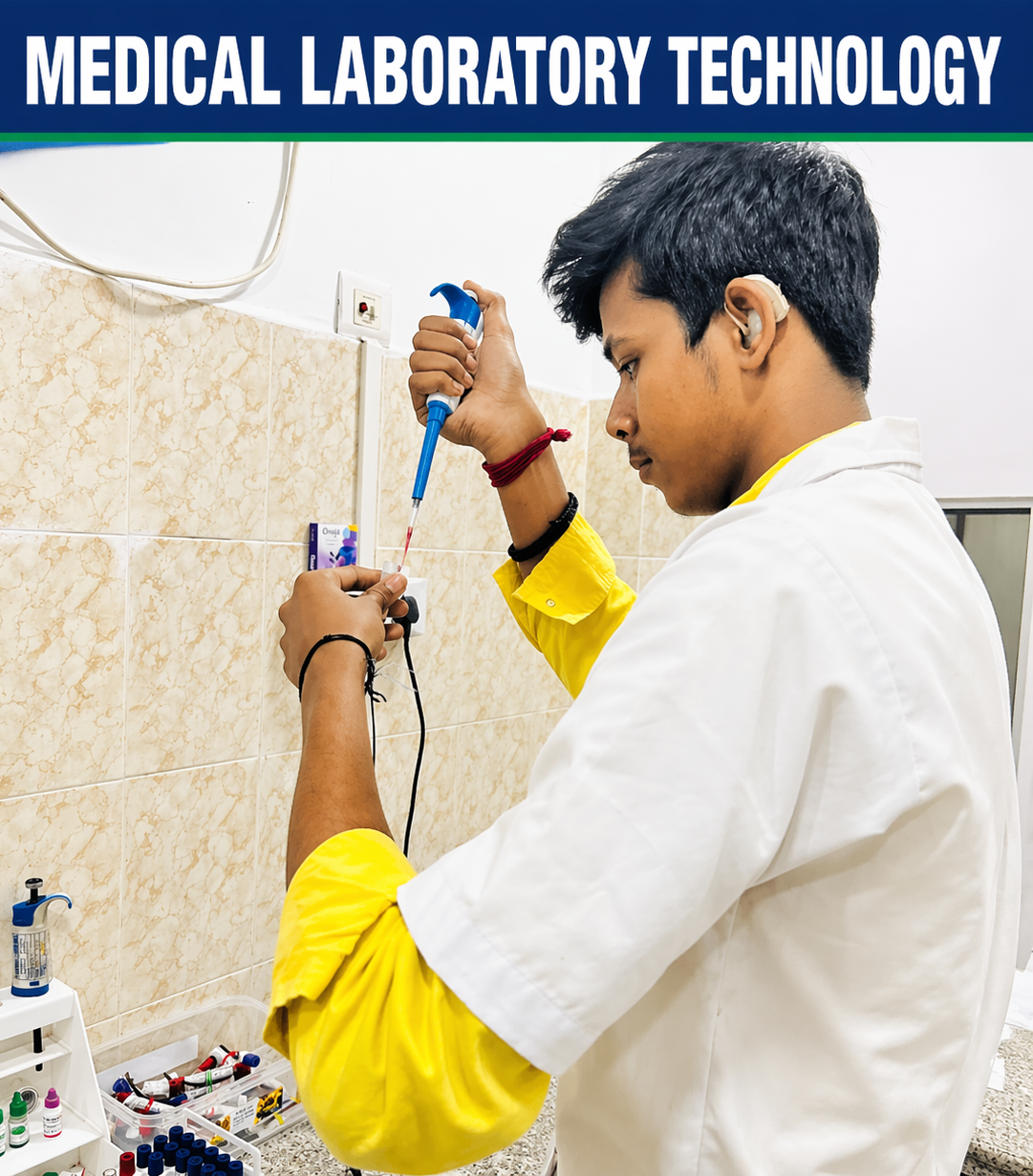
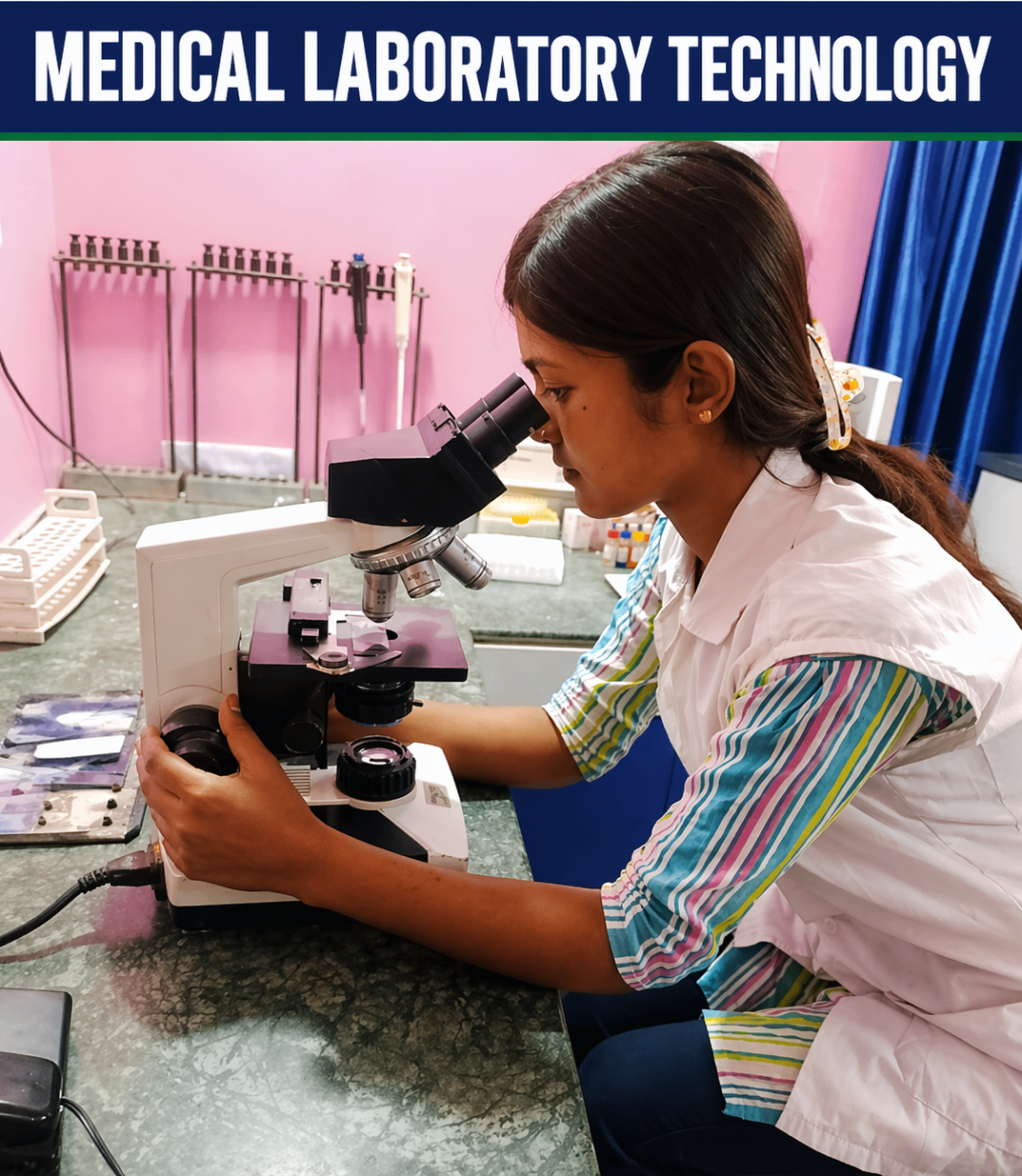
Medical Laboratory Technology (MLT)** Medical Laboratory Technology is a healthcare-focused field that trains students to perform diagnostic tests essential for detecting, diagnosing, and treating diseases. The course combines theoretical knowledge with practical laboratory skills in areas like clinical biochemistry, microbiology, hematology, and pathology. Students learn to handle advanced laboratory equipment, analyze blood and other body fluids, and maintain accurate records.
The program also emphasizes quality control, laboratory safety, and ethical practices. Graduates of MLT play a crucial role in the healthcare system by supporting doctors with reliable test results. Career opportunities include working in hospitals, diagnostic labs, research centers, and blood banks, ensuring accurate and timely patient care.
Understand the structure and functions of the human body to relate lab findings with diseases.
Learn proper methods of collecting, labeling, and preserving blood, urine, and other specimens.
Analyze body fluids to detect conditions like diabetes, liver, and kidney disorders.
Identify microorganisms such as bacteria, viruses, and fungi using laboratory techniques.
Study blood components, blood grouping, and detection of blood-related diseases.
Understand disease processes and perform diagnostic tests for accurate medical evaluation.
Operate and maintain modern lab instruments and diagnostic machines.
Follow proper hygiene, sterilization, and safety protocols in laboratory environments.
Ensure accuracy and reliability of test results through standard quality checks..
Prepare precise lab reports and maintain professional ethics and confidentiality.
MBIT offers Medical Laboratory Technology courses designed to provide strong theoretical knowledge and practical laboratory skills. Students learn diagnostic techniques, sample analysis, and operation of modern lab equipment. The program includes hands-on training, experienced faculty guidance, and industry-relevant curriculum, preparing students for careers in hospitals, diagnostic centers, and research laboratories with professional competence.
MBIT provides a comprehensive Medical Laboratory Technology curriculum covering anatomy, biochemistry, microbiology, hematology, and pathology. The course emphasizes practical training, diagnostic techniques, and modern laboratory equipment handling. Students gain hands-on experience, ensuring accurate test analysis and reporting, preparing them for successful careers in hospitals, diagnostic centers, and research laboratories.
Human Anatomy & Physiology is the study of the structure and functions of the human body. It explains how organs, tissues, and systems such as the heart, lungs, and brain work together to maintain life. This subject helps students understand normal body functions and provides a foundation for identifying diseases and interpreting medical laboratory results accurately.
Structure and functions of human body systems
Digestive, respiratory, circulatory, nervous systems
Basics of cells and tissues
Understanding normal body functions related to lab diagnosis
**Basic Biochemistry** is the study of the chemical substances and processes that occur within living organisms. It focuses on biomolecules such as carbohydrates, proteins, lipids, and enzymes, and how they function in the body. This subject helps understand metabolism, energy production, and the biochemical basis of diseases, forming a foundation for medical laboratory analysis and diagnostics.
Introduction to biomolecules
Carbohydrates, proteins, lipids
Enzymes and metabolism basics
Clinical significance of biochemical tests
Fundamentals of Microbiology is the study of microorganisms such as bacteria, viruses, fungi, and parasites. It covers their structure, growth, and role in causing diseases. Students learn sterilization, culture techniques, and identification methods, helping in accurate diagnosis, infection control, and understanding how microbes affect human health and the environment.
Introduction to microorganisms
Bacteria, viruses, fungi, parasites
Sterilization and disinfection techniques
Culture media preparation and usage
**Basic Hematology** is the branch of medical science that studies blood, its components (red blood cells, white blood cells, platelets), and their functions. It involves examining blood samples to identify disorders such as anemia, infections, and clotting problems, helping in diagnosis, monitoring, and treatment of various diseases.
Composition of blood
Blood cell formation (hematopoiesis)
Basic blood tests (Hb, RBC, WBC count)
**Laboratory Techniques & Safety** refers to the standard methods and procedures used in handling samples, performing tests, and operating laboratory equipment, along with the safety measures required to prevent accidents and contamination. It includes proper sample collection, use of protective equipment, sterilization, and adherence to hygiene and safety protocols in the laboratory.
Sample collection and handling
Blood, urine, sputum
Use of microscopes and basic lab instruments
Laboratory safety, hygiene, and waste disposal

Sr. Python Developer
(5.0 / 4.2 Rating)
76 Courses
Jordan Walk is an
experienced Senior Python Developer with a strong focus on
building scalable and efficient solutions.
With extensive knowledge in Python and backend development,
Jordan has a track record of leading successful projects,
optimizing performance, and implementing best practices.
Skill Level
AdvanceLanguage
English,BengaliCertificate
After CompletedPlacement
After Completed100% Placement opportunities!!!



2 Reviews
Kevin martin 20 Oct, 2025 . 4:00 pm
Lorem ipsum dolor sit amet, cibo mundi ea duo, vim exerci phaedrum. There are many variations of passages of Lorem Ipsum available, but the majority have alteration in some injected or words which don't look even slightly believable. If you are going to use a passage of Lorem Ipsum, you need to be sure there isn't anything embarrang hidden in the middle of text.
Sarah albert 20 Oct, 2025 . 4:00 pm
It has survived not only five centuries, but also the leap into electronic typesetting unchanged. It was popularised in the sheets containing lorem ipsum is simply free text. Class aptent taciti sociosqu ad litora torquent per conubia nostra, per inceptos himenaeos. Vestibulum sollicitudin varius mauris non dignissim.